Where No-Ribbon Barcode Printing Fits Into a Modern Labeling Software Stack
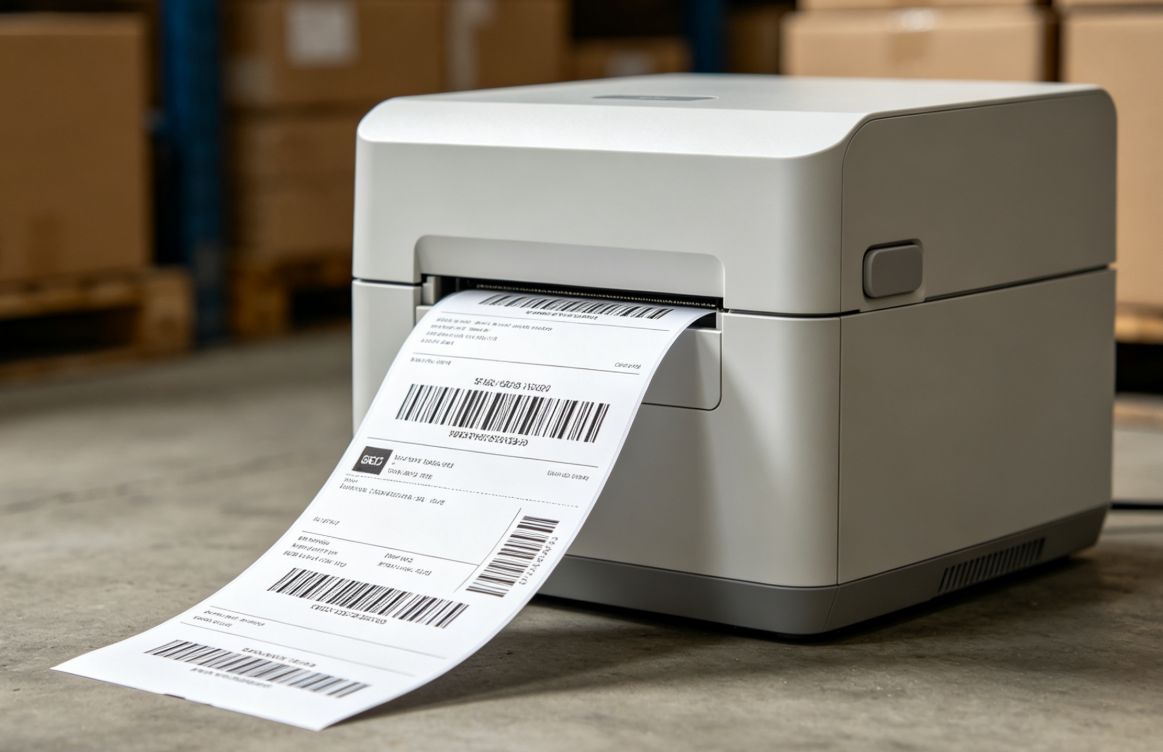
Barcode labeling systems depend on more than just a printer and a roll of stock. Software has to track inventory, generate label templates, and coordinate with hardware that has its own consumable requirements. For many operations teams, one of the more persistent friction points in that workflow is ribbon management: knowing when a thermal transfer ribbon is running low, ordering the correct width and length, and making sure it matches the label stock being used that day.
Direct thermal printing removes that variable by eliminating the ribbon altogether. Rather than fusing ink onto a label through a heated ribbon, direct thermal printers apply heat directly to chemically treated label material, which darkens to form the image. Products such as DuraFast direct thermal labels are built specifically for this process, meaning the labeling software only needs to manage one consumable category instead of two. For teams running high label volumes, that single change can meaningfully simplify inventory planning on the supply side of a print operation.
The Consumables Problem in Labeling Workflows
Anyone who has managed a print station with thermal transfer printers knows the routine. Ribbon and label stock have to be matched by width and sometimes by chemistry, since wax, wax-resin, and resin ribbons behave differently depending on the label material. Running out of ribbon mid-shift halts production even if there is plenty of label stock left on the machine. GS1, the international organization that maintains global barcode standards, notes that label print quality and consistency are directly tied to how well hardware and consumables are matched and maintained, which is part of why many operations teams treat ribbon tracking as its own recurring task.
This becomes more complicated at scale. A distribution center running several printers across shifts may need to track multiple ribbon types simultaneously, reorder before stock runs out, and train staff to load ribbons correctly, since a misaligned ribbon can cause faded or skipped print segments. Software platforms that manage label templates often have to account for these variables too, adjusting print settings depending on which ribbon and label combination is loaded.
How Direct Thermal Technology Changes the Equation
Because direct thermal printing does not use a ribbon, this entire category of coordination disappears. The Association for Automatic Identification and Mobility (AIM), an industry group focused on data capture technologies, describes direct thermal printing as a common choice for applications where labels have a shorter functional lifespan, such as shipping labels, receipts, and short-term inventory tags, since the labels are more sensitive to heat and light exposure over time than thermal transfer prints.
That tradeoff matters. Direct thermal labels are generally not recommended for long-term or outdoor use where sun exposure or heat can fade the print. But for warehouses, retail backrooms, and fulfillment centers where labels are read and then discarded or replaced within weeks or months, the simplicity gain often outweighs the durability tradeoff.
From a software stack perspective, removing the ribbon variable simplifies several things at once. Inventory management systems no longer need to track two consumable SKUs per printer. Print queue software does not need conditional logic for ribbon type. And staff training becomes more straightforward, since there is one less component that can be loaded incorrectly.
What to Look for in Label Design Software for Ribbon-Free Printing
Switching to direct thermal printing does shift some responsibility onto the software side, particularly around print settings and label design. A few considerations tend to matter most.
- Heat and darkness controls: since image quality depends entirely on heat calibration rather than ribbon type, software should allow granular adjustment of print darkness settings per printer model.
- Label stock profiles: good labeling software maintains a library of direct thermal stock profiles, since different paper and synthetic thermal materials respond differently to heat.
- Barcode verification tools: because fading is a longer-term risk with direct thermal prints, software with built-in barcode grading or verification features can help confirm scannability before labels leave the printer.
- Template flexibility: since direct thermal labels are often used for high-turnover applications like shipping and receiving, software that supports quick template switching and batch printing tends to fit these workflows better than systems designed primarily for static, long-term labeling.
Industry researchers at Gartner have pointed out in supply chain technology coverage that labeling and print management are increasingly treated as part of broader warehouse execution software rather than standalone tools, which means compatibility between label design platforms and printer hardware, ribbon-based or not, is becoming a more central purchasing consideration.
READ ALSO: Tesla’s Software Revolution | Redefining the Future of Automotive Technology
Looking Ahead
As more operations prioritize simplicity and speed in their labeling infrastructure, ribbon-free direct thermal printing is likely to remain a common fit for short-cycle applications. The real value shows up less in the printer itself and more in how much complexity it removes from the software and inventory processes built around it. For teams evaluating their labeling stack, understanding where direct thermal technology fits, and where it does not, remains a useful starting point before making hardware or software decisions.